
As the hydrofoil bounced up the Danube from Vienna toward Budapest, commuters and knowledgeable travelers shared tantalizing descriptions of Hungarian cuisine. The Viennese gave goulash only a mention, far behind crayfish drenched in butter or dipped into paprikash sauce. You might find bargains in embroidery, crystal, fine wines but a platter of crayfish—fat, fresh-water lobster-like crustaceans from Hungarian rivers—was the greatest bargain to be found in all Eastern Europe in the last days of the Soviet empire.
We docked on the Buda side of the Danube. A chilling fog rose from the wide, metal-grey river and the sun already lay low in a cloudy sky. I had no hotel reservations and worried that I should have found something in advance.
An elderly couple, both wearing Tyrolean hats, approached as soon as I walked off the quai.
‘Room, all conveniences,’ the small man with a mustache said in English.
I followed the pair up winding cobbled streets to their small home. My hosts showed me a room with a bed, a basin and starched towels, everything clean and spare.
They were retired teachers who had converted their children’s rooms to take paying guests.
They poured me a glass of rich, red wine. ‘Absolutely, you must eat crayfish,’ they agreed when I told them about the conversations on the boat. They said there was a small but decent restaurant on a street along the Danube only a few blocks away. I would recognize it by the symbol of claws beneath a lantern on the door. They made pincers with their fingers, then braced me for the walk with another glass of red wine.
‘It’s from the old times, from before. You will be treated like a princess,’ they assured me.
The cobbled streets were dark. River dampness penetrated my coat and boots. I passed one illuminated sign with a bunch of grapes. Another pictured a pot of goulash bubbling over a fire. These doors beckoned, but I persevered. The narrow dark walls on both sides seemed to tilt inward like claustrophobic Expressionist stage set. I half expected Peter Lorre to emerge from the mist.
In the distance, two red claws glowed under the golden aura of a lantern. I pushed open a heavy door and warmth embraced me.
‘Good evening, madame,’ said an elegant old man who relieved me of my coat. He flourished a great white napkin and bowed as he ushered me in. I had my choice of tables. Only one couple sat at a banquette along the wall.
At each table, a large candle spilled light onto the silver and crystal settings, on the dark wood walls and garnet-coloured velvet swagged curtains. The other diners, a Soviet military officer and his companion, a young blonde woman whose hair fell over one eye like Veronica Lake, were not going to make eye contact with me. They looked only at each other.
Two waiters nodded when I made pincers. They also approved a bottle of Hungarian white wine from a choice of illustrated labels. They brought a loaf of dark bread, golden butter curls, gherkins and a slice of paté, and poured wine into a goblet. My crustaceans arrived under a silver dome. When the waiter lifted its lid, not one but two red crayfish the size of small lobsters lay in a final embrace on the plate. The waiter did magical things with tools, cracking open shells and detaching flesh so it lay almost palpitating in freshness before me. They poured butter into a shallow cup placed at the side.
My first bite was a revelation. Sweet, complex and delicate, this river crustacean was not briny like lobster, but had an exquisite delicacy.
Just then, gypsies burst into the room, twelve men like a dozen blackbirds released from a pie, sporting black mustaches, heads of gleaming black hair, white napkins and fiddles on their shoulders. I looked down at the crayfish in their rosy carapaces. I ate another bite and drank several sips of wine, feeling ungrateful to be eating while the gypsies poured out their hearts, their music a sad history of wandering the face of the earth. Did I have butter on my chin? How could I eat when 24 eyes glowed in my direction? I lifted my glass to them, thinking they’d done their work, thank you, but my gesture only increased their fiddling in tremulous unison, like a hive of bees.
The gypsies must have serenaded me for a half hour. I drank most of the bottle of wine but left some crayfish in the pincers. My bill came to under $10. I gave the gypsies twice that in a tip, and thanked everyone again. They bowed as I passed and I headed out onto the dark, foggy banks of the Danube where Peter Lorre might appear any moment.
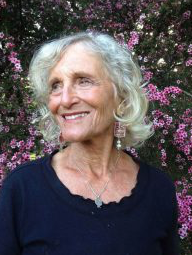 Barbara L. Baer is a teacher, journalist and editor living in Northern California. She is the author of four novels in print from various small presses, most recently “The Ice Palace Waltz”, and has published shorter pieces in anthologies and periodicals.
Illustration via Unsplash.